Transformer Oil BDV: What It Means, How It Is Tested and How to Improve It
Key takeaways
- Transformer oil BDV (breakdown voltage) is the voltage at which oil stops insulating and a spark jumps across a test gap.
- Water is the biggest cause of low BDV. Particles, gases and aged oil also lower it.
- BDV is tested in a lab cell with two electrodes, for example to IEC 60156, and the result is given in kV.
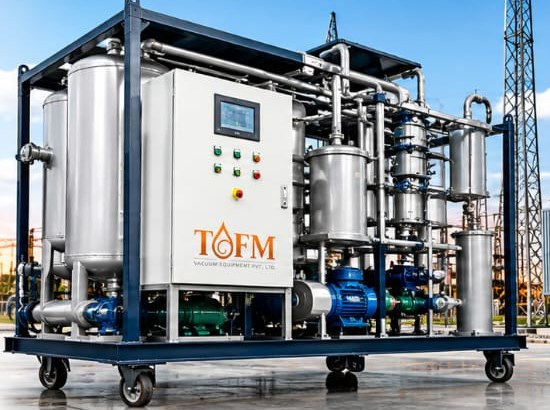
- Filtration raises BDV by removing water, gases and particles. TOFM machines reach BDV up to 80 kV after treatment.
- Filtration cannot fix chemically aged oil; that oil needs reclamation or replacement.
Transformer oil BDV is the breakdown voltage of insulating oil: the voltage at which the oil can no longer insulate and a spark passes between two electrodes. It is measured in kilovolts (kV). A higher BDV means the oil insulates better.
This guide explains what lowers BDV, how the test works and how oil filtration brings it back up.
What is transformer oil BDV?
BDV is a simple measure of insulating strength. In the test, a lab fills a small cell with oil and slowly raises the voltage across two electrodes. The voltage at which a spark jumps the gap is the breakdown voltage.
Because it is quick and cheap, BDV is one of the most common routine tests for transformer oil. As a result, utilities and maintenance teams use it to decide when oil needs treatment.
Why does BDV matter?
BDV matters because the oil insulates the windings from each other and from the tank. If the oil loses insulating strength, the risk of an internal flashover rises. As a result, a low BDV is a clear signal to test the oil further and plan treatment.
What lowers transformer oil BDV?
Water is the main cause of low BDV. However, four contaminants usually work together:
- Water. Dissolved and free water both reduce insulating strength.
- Particles. Fibres, dust and metal particles create weak paths, and wet fibres are the worst.
- Gases. Air and other gases can form bubbles under electrical stress.
- Ageing. Oxidation products from old oil also lower the result.
How is transformer oil BDV tested?
A lab tests BDV in a standard cell with two electrodes set at a fixed gap. For example, IEC 60156 uses spherical electrodes 2.5 mm apart and raises the voltage at 2 kV per second. The lab repeats the breakdown several times and reports the average. In some markets, labs use ASTM D1816 or D877 instead.
Two practical points matter. First, compare results only from the same test method, because each method gives different numbers. Second, take samples in clean, dry bottles. A wet or dirty bottle gives a falsely low result.
What is a good BDV value?
A good value depends on the transformer's voltage class and whether the oil is new or in service. For this reason, there is no single number for every transformer. Use the limits in IEC 60422 or IS 1866, or the ones your utility or oil laboratory sets for your equipment.
How does filtration improve transformer oil BDV?
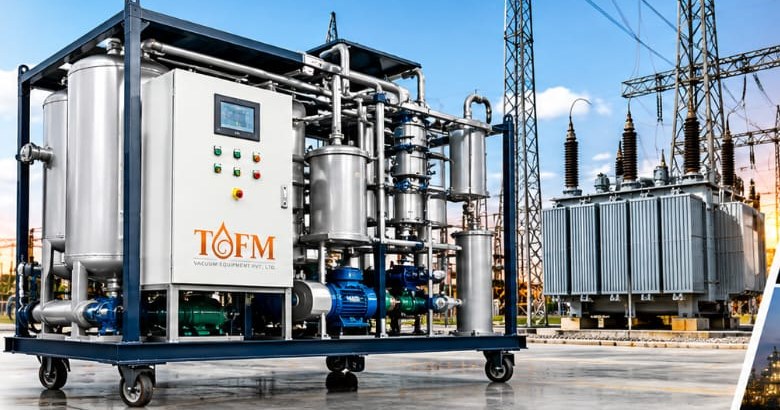
Filtration improves BDV by removing the contaminants that lower it. Each stage of a transformer oil filtration machine targets one cause:
| Cause of low BDV | Machine stage that removes it |
|---|---|
| Dissolved water | Heating plus vacuum dehydration |
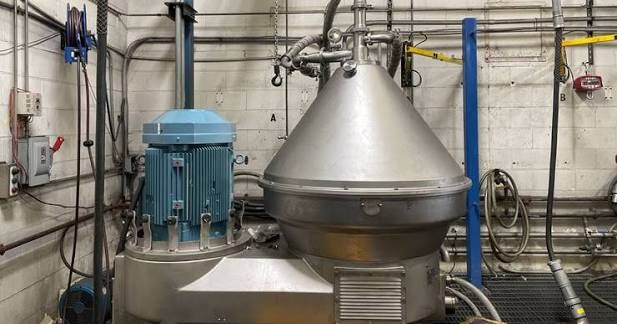
| Free water and sludge | Oil-water centrifuge (optional) |
| Dissolved gases | Vacuum degassing |
| Particles and fibres | Fine filtration |
TOFM machines work below 0.1 mbar vacuum, filter to 1 micron or finer and bring oil to 3 to 5 ppm moisture, with BDV up to 80 kV after treatment. To see each stage in detail, read how transformer oil filtration works.
When will filtration not fix low BDV?
Filtration will not fix oil that has aged chemically. If tests also show high acidity or sludge, the oil needs reclamation or replacement. Therefore, always check acidity and other oil tests along with BDV before deciding on treatment.
Summary
Transformer oil BDV measures how well oil insulates, in kV. Water is the main cause of low BDV, followed by particles, gases and ageing. Labs test BDV in a standard cell, so compare results only from the same method and use clean, dry sample bottles. Filtration raises BDV by removing water, gases and particles, and TOFM machines reach up to 80 kV after treatment. Chemically aged oil needs reclamation or replacement instead.
Frequently asked questions
What does BDV mean in transformer oil?
BDV stands for breakdown voltage. It is the voltage at which transformer oil stops insulating and a spark jumps between two electrodes in a test cell.
What is the main cause of low BDV in transformer oil?
Water is the main cause. Particles, dissolved gases and oxidation products from aged oil also lower BDV, and wet particles have the strongest effect.
How is BDV measured?
A lab fills a test cell with oil and raises the voltage across two electrodes until breakdown. It repeats the test several times and reports the average in kV, using a standard such as IEC 60156.
Can filtration increase BDV?
Yes. Filtration removes water, gases and particles, which raises BDV. TOFM transformer oil filtration machines reach BDV up to 80 kV after treatment.
What is an acceptable BDV value?
It depends on the transformer's voltage class and whether the oil is new or in service. Use the limits in IEC 60422, IS 1866 or your utility's maintenance standard.
Why is my BDV result low right after filtration?
Check the sampling first. A wet or dirty sample bottle, or a sample taken from a dead leg of pipe, can give a falsely low result. If the result stays low, the oil may need more passes.
This article gives general technical guidance. Always follow the transformer manufacturer's instructions and the standards that apply to your equipment.