Overview
Paper and pressboard insulation absorb water from the air during manufacture and repair. Water in the insulation lowers its dielectric strength and speeds up ageing, so it must be removed before the transformer is filled with oil.
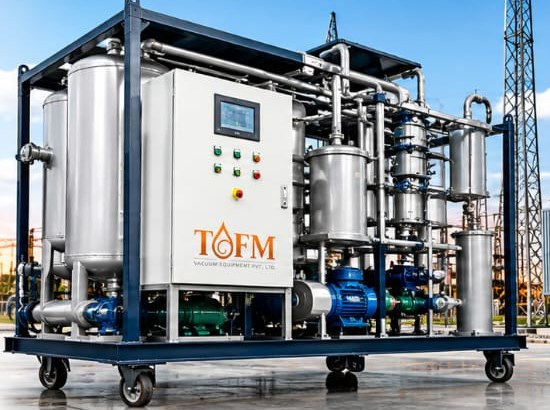
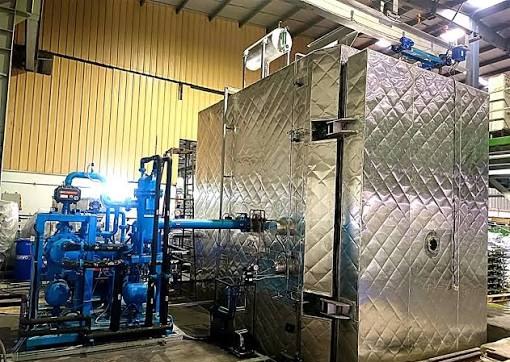
A TOFM vacuum drying plant applies gentle, controlled heat and draws vacuum on the drying chamber. The vacuum lowers the boiling point of water, so moisture leaves the insulation without overheating it. Continuous monitoring tracks the process until the drying end point is reached.
How does vacuum drying of a transformer work?
Features and advantages
Gentle heat application
Controlled heating protects cellulose insulation.
Continuous monitoring
Process values tracked through the drying cycle.
Industrial automation
Automatic control of heating and vacuum where specified.
Capacity options
Chamber size and capacity matched to your transformers.
Applications
- Drying new transformer active parts
- Drying after rewinding or repair
- Reactors and instrument transformers
- Insulation components
Industries served
- Transformer manufacturers
- Transformer repair workshops
- Utility repair units
- Electrical equipment manufacturers
Technical specifications
| Plant type | Vacuum drying plant |
|---|---|
| Chamber dimensions | Customised to transformer and active part size |
| Temperature range | Ambient up to 130 °C; drying typically at 105 to 125 °C Typical |
| Vacuum level | Below 1 mbar Typical |
| Heating method / capacity | Electric or thermic fluid heating, sized to the chamber and load Typical |
| Controls | Automatic control and continuous monitoring |
| Minimum order quantity | 1 unit |
| Manufacturing lead time | Up to 60 to 70 days |
Specifications depend on the model and configuration. Request the datasheet for your capacity.
Frequently asked questions
Why do transformers need vacuum drying?
Cellulose insulation absorbs water during manufacture and repair. Water lowers insulation strength and speeds up ageing, so it is removed before oil filling.
Why use vacuum instead of heat alone?
Vacuum lowers the boiling point of water, so moisture evaporates at a lower insulation temperature. This dries the insulation thoroughly without overheating it.
How long does vacuum drying take?
It depends on the transformer size, the insulation mass, its starting moisture and the plant capacity. The process runs until the moisture removal rate reaches the agreed end point.
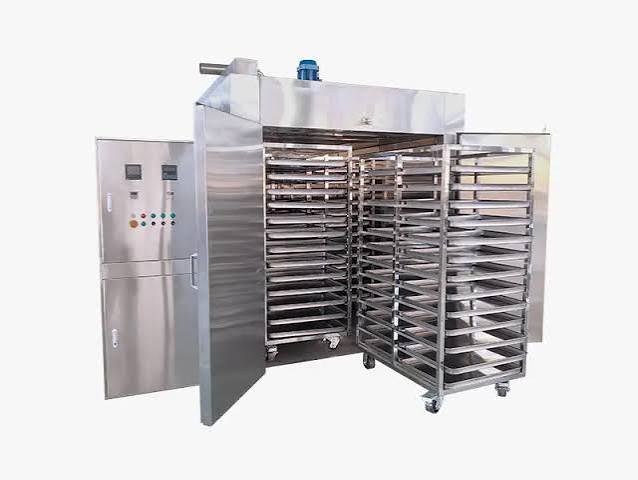
What is the difference between a vacuum drying plant and a drying oven?
A drying oven uses controlled heat at atmospheric pressure. A vacuum drying plant combines heat with vacuum for deeper, faster moisture removal from insulation.