Overview
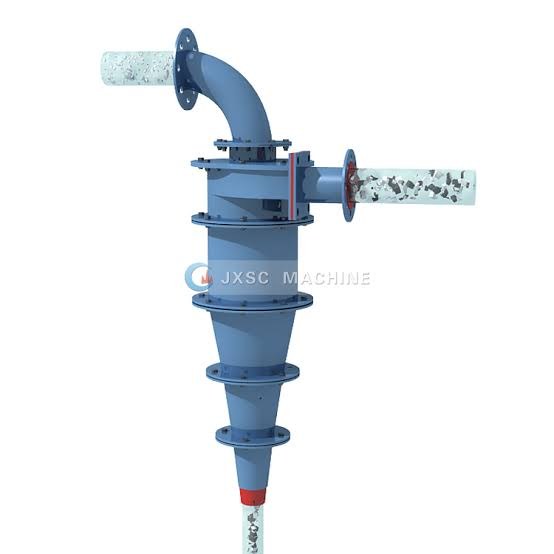
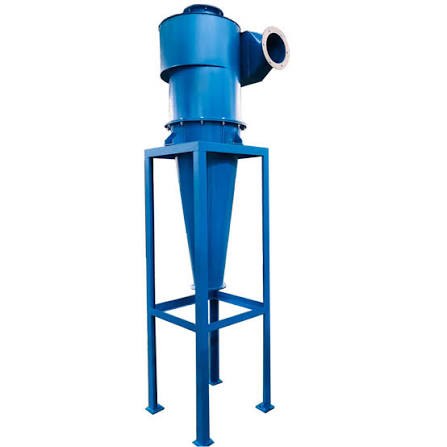
Cyclone separators are one of the simplest ways to remove coarse dust from an air or gas stream. Dust-laden air enters tangentially, spins down the cone, and solids drop into a hopper while the cleaned air leaves through the central outlet.
A cyclone is often installed ahead of bag filters or vacuum pumps to take out the coarse load, which extends filter life and protects rotating equipment.
How does an air-solid cyclone separator work?
Features and advantages
Simple and robust
No moving parts and low maintenance.
Protects downstream equipment
Removes coarse dust before bag filters and vacuum pumps.
Fabricated to duty
Sized for air flow, dust load and temperature.
Service and spare parts
Support from the manufacturer.
Applications
- Dust collection ahead of bag filters
- Product recovery from pneumatic conveying
- Vacuum pump inlet protection
- Process exhaust pre-cleaning
Industries served
- Process plants
- Cement and minerals
- Heavy engineering
- Oil and gas
Technical specifications
| Separator type | Air-solid cyclone separator |
|---|---|
| Air / gas flow | As per requirement |
| Particle size range | Coarse and medium dust, typically 10 micron and above Typical |
| Separation efficiency | Design dependent; confirmed for each application |
| Pressure drop | Typically 50 to 150 mm WC Typical |
| Material of construction | MS and SS |
| Minimum order quantity | 1 unit |
| Manufacturing lead time | Up to 60 to 70 days |
Specifications depend on the model and configuration. Request the datasheet for your capacity.
Frequently asked questions
What size of dust does a cyclone separator remove?
Cyclones are most effective on coarse and medium particles. Very fine dust usually needs a bag filter or other fine filter after the cyclone. TOFM confirms the expected performance for your dust during consultation.
Why use a cyclone before a bag filter?
The cyclone removes most of the coarse dust load, so the bag filter handles less material, cleans less often and lasts longer.
Can a cyclone protect a vacuum pump?
Yes. A cyclone on the pump inlet can catch particles that would otherwise enter and wear the pump.