Overview
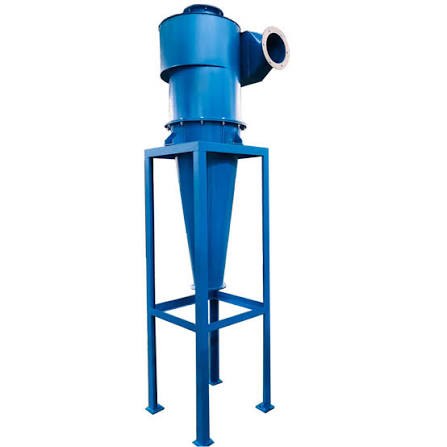
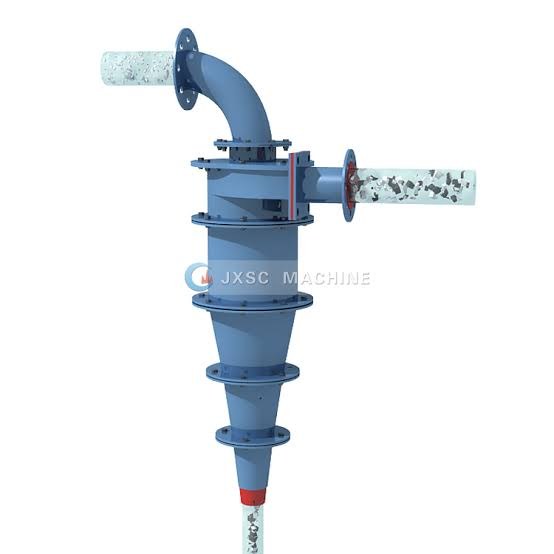
Liquid enters a hydro cyclone tangentially and spins down the conical body. Heavier solids move outward to the wall and leave through the underflow at the bottom. The cleaner liquid forms an inner vortex and exits through the overflow at the top.
Because there are no moving parts, a hydro cyclone needs little maintenance and is often used to remove grit and solids ahead of filters, which protects the filters and extends their life.
How does a hydro cyclone separator work?
Features and advantages
No moving parts
Low maintenance and simple operation.
Protects downstream filters
Removes grit and heavier solids before fine filtration.
Fabricated to duty
Sized for your flow rate, pressure and material.
Service and spare parts
Support from the manufacturer.
Applications
- Solids removal ahead of filters
- Process water recirculation
- Effluent pre-treatment
- Sand and grit removal
- Cooling water side-stream cleaning
Industries served
- Process plants
- Oil and gas
- Power plants
- Water and effluent treatment
- Heavy engineering
Technical specifications
| Separator type | Hydro cyclone (liquid-solid or liquid-liquid) |
|---|---|
| Flow capacity | As per requirement |
| Separation cut size (particle size) | As per requirement |
| Operating pressure / pressure drop | As per requirement |
| Material of construction | MS and SS |
| Minimum order quantity | 1 unit |
| Manufacturing lead time | Up to 60 to 70 days |
Specifications depend on the model and configuration. Request the datasheet for your capacity.
Frequently asked questions
What is the difference between a hydro cyclone and a centrifuge?
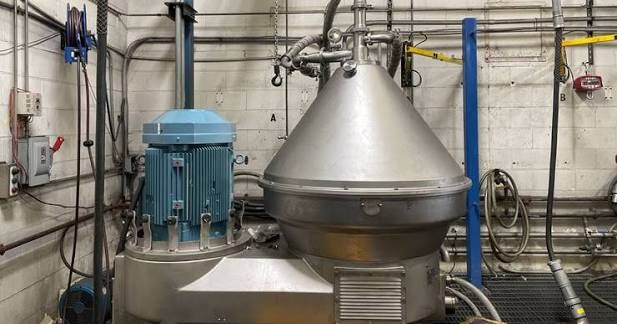
A hydro cyclone has no moving parts and uses the energy of the pumped flow to create the swirl. A centrifuge uses a motor-driven rotating bowl, which gives stronger separation for fine droplets such as free water in oil.
What does a hydro cyclone remove?
It removes particles and liquids that are denser than the main liquid, such as sand, grit and heavier solids. Very fine or light particles may need filtration downstream.
How is a hydro cyclone sized?
It is sized from the flow rate, the available pressure, the solids content and the particle size you need to remove. TOFM confirms these during technical consultation.